Wood vs. Stainless Steel Rollers
Wood or Steel? Why We Offer Two Different Rollers for the SVS Tabletop Slab Roller
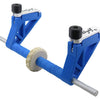
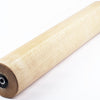
The Relyef SVS tabletop slab roller can be equipped with either a wooden or a stainless steel roller - each suited for a different type of work. The wooden roller provides a more natural feel when working with clay and transfers impressions and textures better because it can operate without canvas. The stainless steel roller ensures flatter, more precise slabs ideal for technically demanding projects like tiles or structural components.
When we designed the SVS Slab Roller, we faced a simple, practical question: what do you actually expect from a roller?
We discovered that it depends entirely on your project. It depends on whether you are throwing a slab over a mold for a bowl, or rolling out a series of tiles that must fit together flawlessly. It depends on whether you want to press a rich texture into the clay surface, or if you need a pristine, technically flat plane. That is why the SVS does not offer just one "correct" roller - it offers two. This choice is intentional, not a compromise.
The Wooden Roller - The Clay-Loving Standard
Wood is our default material. Not because it is cheaper or easier to machine, but because it behaves differently when it interacts with clay - it feels alive.
What this means in your studio:
-
Less sticking: Clay does not suction itself to wood as easily as it does to mirror-smooth, impervious surfaces. Your workflow remains fluid, meaning less frustration and fewer breaks to peel stuck clay off the roller.
-
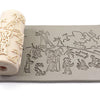
Superior texture transfer: This is crucial. If you are pressing a stamp, fabric, or any texture pattern into the slab, wood transfers that force more organically. The impressions come out deeper and more uniform - all without needing a canvas interface.
-
Flexible setup: Want to work with canvas? No problem. Want to roll directly on the wood? Go ahead. Wood accommodates your workflow without imposing strict rules.
Tip: If you prefer working without canvas to get the cleanest possible texture transfer, lightly dust the wooden roller with cornstarch before rolling very wet or sticky clay bodies.

Let’s Be Honest: Where Wood Hits Its Limit
Wood is an organic, hydroscopic material. Organic materials possess character and slight structural tolerances. Over time or under tension, a wooden roller may exhibit a minor manufacturing or material deviation along its axis. This can occasionally result in faint waves on the slab or thickness variations that can exceed 1 mm (0.04 inches).
For 95% of studio pottery - bowls, plates, sculptural work, and textured panels - this variance is completely irrelevant. Clay embraces a bit of imperfection. But if you are building architectural forms where fractions of a millimeter dictate success, read on.
The Stainless Steel Roller - For Ultimate Precision
The stainless steel roller is an optional accessory for SVS rollers. It is not a necessary upgrade for every potter, but for specific technical projects, it is the exact tool that determines your success.
Where steel wins:
-
Geometric accuracy: The metal cylinder is machined to a significantly tighter tolerance than wood. The result is a perfectly flat, highly repeatable slab—every single piece matches the last.
-
Technical projects: Tiles, architectural elements, and modular slip-joint assemblies where pieces must align perfectly. This work demands the structural consistency that steel naturally provides.
-
Resistance to grog: Heavy grog, molochite, and coarse fireclay aggregates will embed themselves into a wooden surface over time, scoring it. The hardened stainless steel surface handles abrasive bodies without a scratch.
-
Zero maintenance: Wipe down, rinse, and you are done. No oiling, no wood conditioning, and zero risk of checking or cracking after a dry off-season.

From the Relyef Studio: Our Take
Tomáš advises: "For 90% of everyday pottery work, I reach for the wood. It has a better rhythm, better feedback - the clay responds naturally to a wooden roller. But I have a few clients who produce production-run tiles or modular wall pieces, and they appreciated the steel roller instantly. The absolute precision that would otherwise require laborious manual flat-spotting and scraping happens automatically here."
Věra adds: "We demonstrate both options during our studio workshops. Beginners usually gravitate toward wood - it requires less overthinking and allows for more intuitive creating. Advanced potters who require highly repeatable results or work to strict dimensional specs go straight for the stainless steel. One is not better than the other; they simply serve different minds and methods."
How to Choose Your Tool
The wooden roller comes standard with your SVS slab roller. If you are undecided, start there - it handles the vast majority of studio tasks, and the material feedback makes rolling clay a truly enjoyable process.
Add the stainless steel roller to your setup if:
-
You routinely roll production runs of tiles, pavers, or repetitive modular formats.
-
You work primarily with heavily grogged bodies or sculpture bodies and want your tool to remain pristine for years.
-
You require strict engineering accuracy across the entire width of the slab without manual trimming or leveling.
Still unsure which direction fits your studio setup? Drop us a line - we are happy to look at your specific production goals and recommend the right fit.
Have you run clay through an SVS slab roller equipped with both options? What did you notice about the clay memory and compression? Share your thoughts in the comments- Tomáš and Věra read every entry and love talking shop.
Ready to equip your SVS slab roller with a stainless steel roller, or want to explore our full range of studio machinery? Explore the Relyef SVS and Accessories
Are you a studio owner or ceramic instructor? Join the RSPP program to access professional equipment discounts and earn rewards for your student referrals.
-
Posted in
ceramics, clay, creative, Relyef, Slab Roller, Stainless Steel Roller, texture, textured clay, textures, Wood Roller